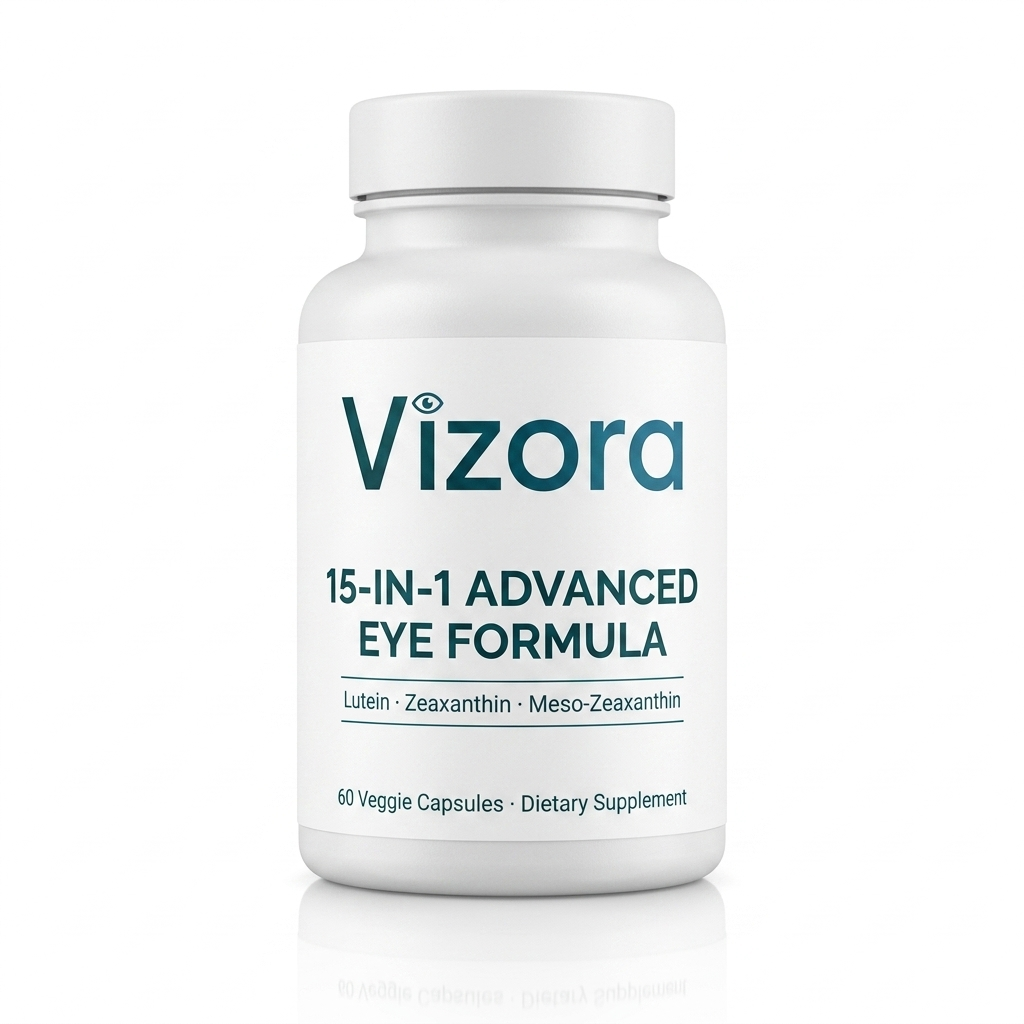
After 50, Your Eyes Start Losing Something No Diet Can Replace — And It's Why Headlights Now Explode Into Halos
It isn't simply "getting older." Three pigments that keep your vision sharp quietly drain from the eye with age and screen light. Here's what the AREDS2 research says about putting them back — and the 15-in-1 formula with DOUBLE the lutein that's getting talked about.


If streetlights have started bursting into halos, if the small print on a menu drifts out of focus, or if your eyes feel fried by mid-afternoon at the screen — you've probably been told the same thing by everyone around you: "That's just age. Get stronger glasses."
But a growing body of eye research points to something most people (and plenty of doctors) overlook. The problem often isn't the lens at the front of your eye. It's what's happening at the back of it — in a tiny patch of tissue called the macula, the part responsible for your sharpest, most detailed central vision.
And the issue isn't that your eyes are simply "wearing out." It's that they're running low on three specific nutrients they can no longer get enough of from food alone.
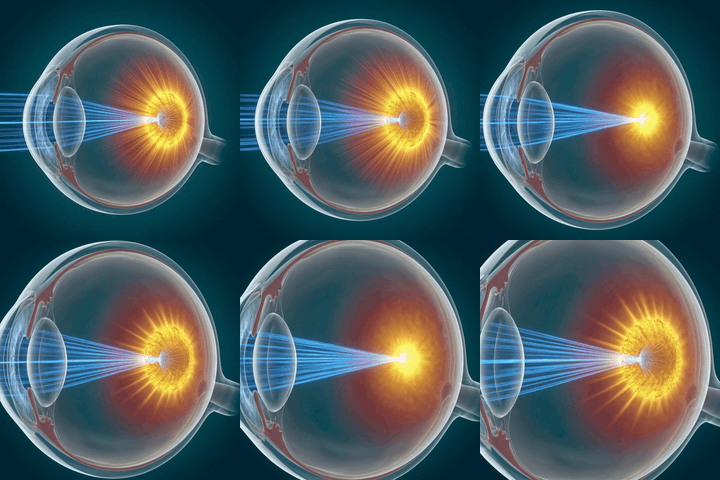
The three pigments that quietly drain from your eyes
Deep in the macula sit three protective pigments: lutein, zeaxanthin and meso-zeaxanthin. Think of them as built-in sunglasses for your retina. They filter the harsh blue light from screens and headlights, soak up damaging oxidative stress, and keep your vision crisp and high-contrast.
Here's the catch: your body cannot make them. You can only get them from your diet — and after 50, with decades of light exposure and lower absorption, most people's levels fall far below what the macula needs. As that pigment density thins, glare gets worse, contrast fades, and night driving turns into a white-knuckle ordeal.
That's the part that surprises people the most: it's not that your eyes are aging beyond help. They're starving for the very nutrients that protect them — and that's something you can actually do something about.
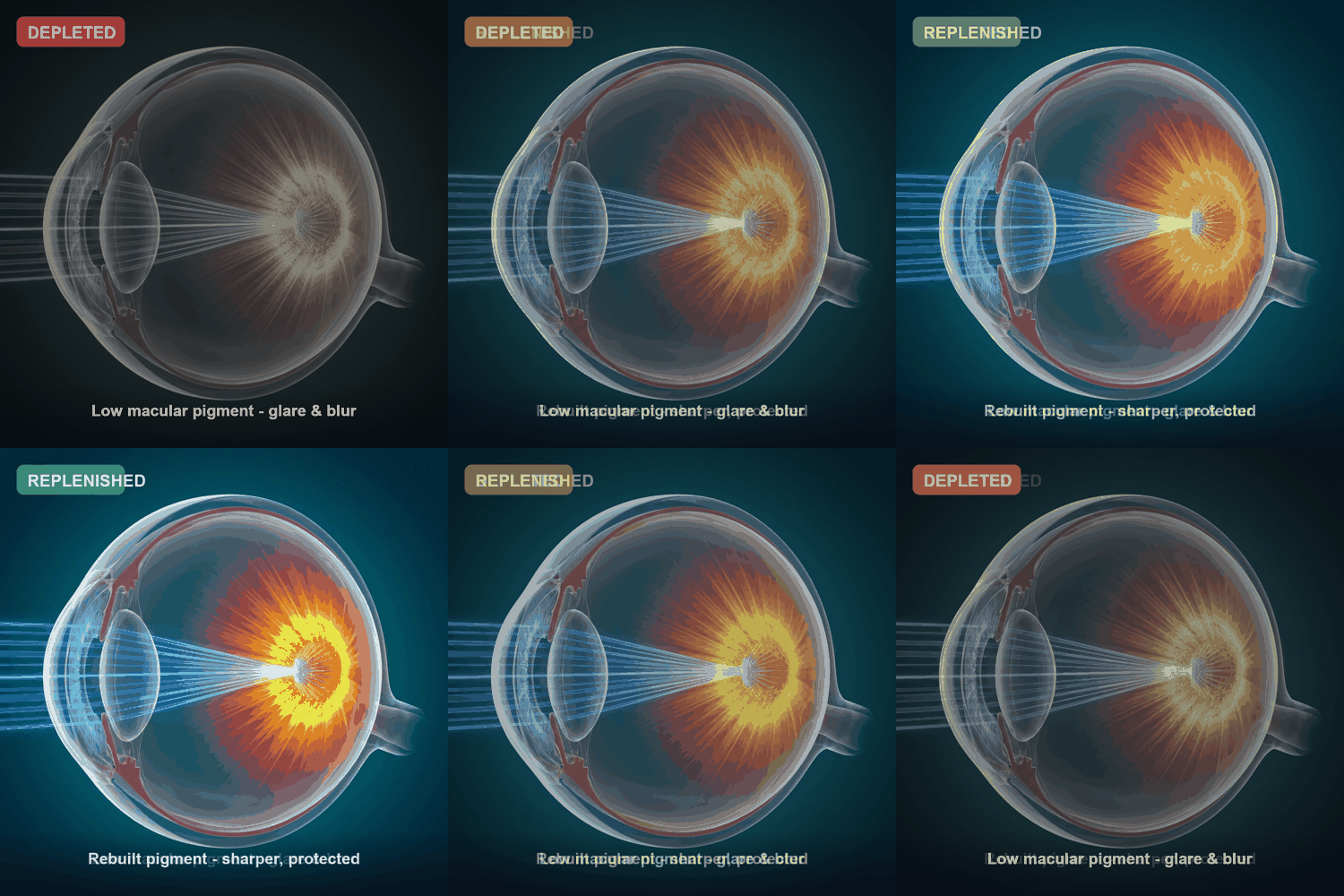
Why glasses (and diet alone) don't fix the real problem
Stronger glasses bend light to compensate for a tired lens. They do nothing for the macular pigment at the back of the eye — which is why so many people get a new prescription and still battle glare, halos and that "washed-out" feeling.
And while leafy greens contain lutein, the math is brutal: studies on macular pigment used doses around 20 mg of lutein a day. You would need to eat roughly a pound of cooked spinach every single day — and absorb all of it — to come close. For most adults over 50, that simply isn't realistic.
What the landmark AREDS2 eye study actually found
3 mistakes people make
The National Eye Institute ran one of the largest eye-nutrition trials ever conducted — known as AREDS2. It confirmed a specific combination of nutrients that supports the aging macula: lutein and zeaxanthin, plus zinc, copper, and vitamins C and E.
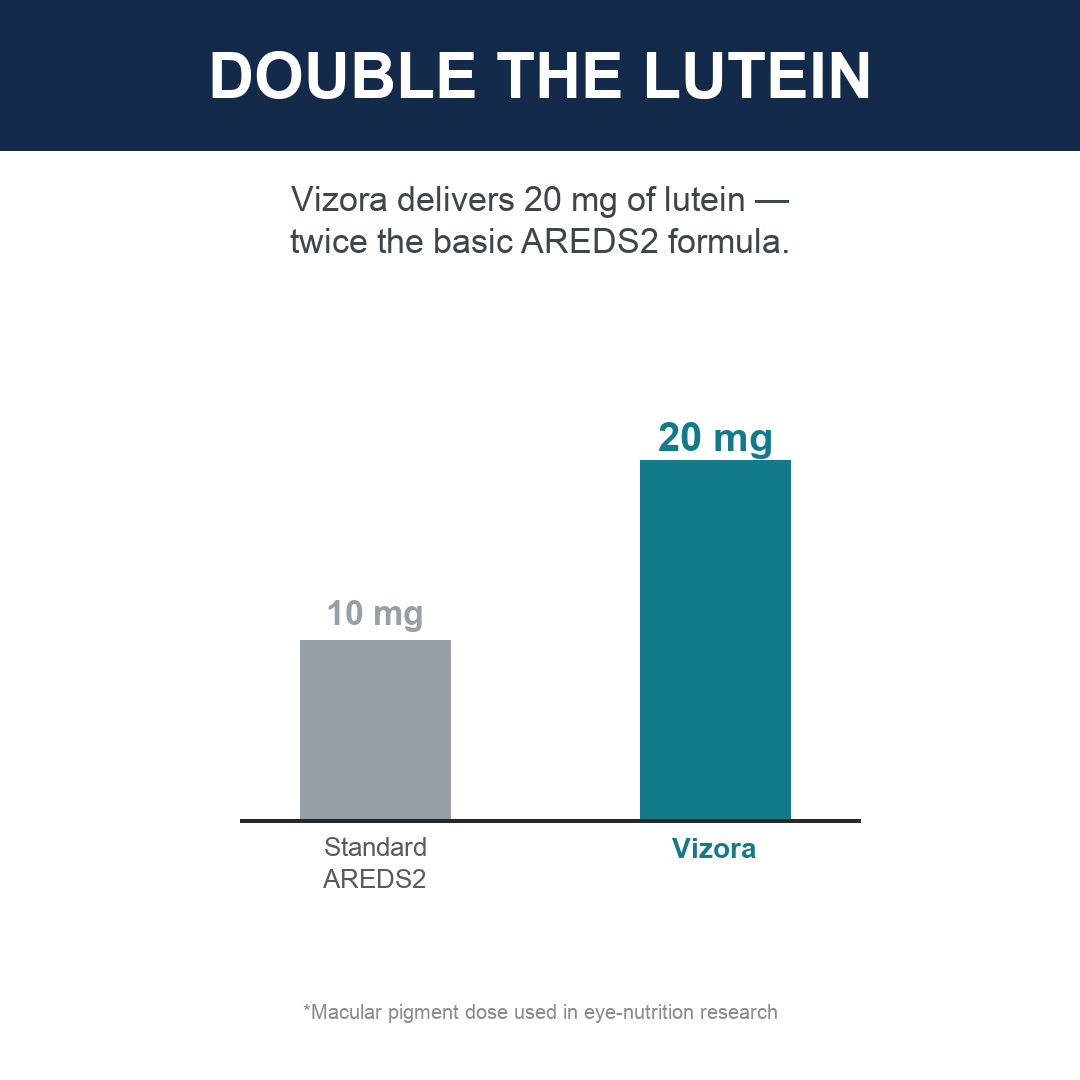
But here's what most pharmacy eye vitamins quietly skip. Many use the bare minimum — around 10 mg of lutein, no meso-zeaxanthin, and none of the extra nutrients newer research keeps pointing to: astaxanthin, bilberry, saffron, ginkgo, alpha-lipoic acid and omega-3 for ocular blood flow and retinal support.
The 15-in-1 formula with DOUBLE the lutein
This is exactly why a new eye formula has been getting attention. It's built on the AREDS2 backbone — then engineered well beyond it. It delivers 20 mg of lutein (double the basic formula), the full trio of macular carotenoids (lutein, zeaxanthin AND meso-zeaxanthin), plus 12 more clinically studied eye nutrients in one capsule pair. Fifteen ingredients. Two capsules a day. No prescription, no injections, no $2,000-a-month clinics.
It isn't a drug and it won't fix your eyes overnight. What it does is give the macula the raw materials it needs to rebuild protective pigment density over the weeks that follow — which is how vision support is supposed to work.

What to realistically expect — week by week
Weeks 1–2 (adaptation): little visible change as levels begin to rise. Weeks 3–6 (pigment buildup): many people report glare and halos starting to soften and screens feeling easier. Weeks 6–12 (reinforcement): steadier focus through the day, better contrast, more confidence behind the wheel at night. Beyond 12 weeks (protective baseline): a daily habit that helps maintain what you've rebuilt.
The people who see the least are almost always the ones who quit in the first week — right before the pigment buildup phase where the difference tends to show. Consistency is the whole game.
The bottom line
If night driving, glare, blur or tired eyes have crept up on you after 50, it may not be "just your age." It may be depleted macular pigment — and that's one of the few age-related eye changes you can actually feed. Replenishing those three pigments, at meaningful doses, alongside the wider AREDS2+ nutrient stack, is the simplest daily step most people have never been told about.
90-day money-back guarantee — even on empty bottles. If you don't notice a difference, email us for a full refund. No return needed.
Vizora 15-in-1 Advanced Eye Formula
Double the lutein. The full macular trio + 12 more eye nutrients. Built on AREDS2 — engineered beyond it.
Get Vizora — Up to 50% Off →Frequently asked questions
If night driving, glare, blur or tired eyes have crept up on you after 50, it may not be "just your age." It may be depleted macular pigment — and that's one of the few age-related eye changes you can actually feed. Replenishing those three pigments, at meaningful doses, alongside the wider AREDS2+ nutrient stack, is the simplest daily step most people have never been told about.
What readers are saying
These statements have not been evaluated by the Food and Drug Administration. This product is not intended to diagnose, treat, cure, or prevent any disease. Individual results vary. Content is for educational purposes and is not medical advice — consult your doctor before starting any supplement, especially if you take medication.