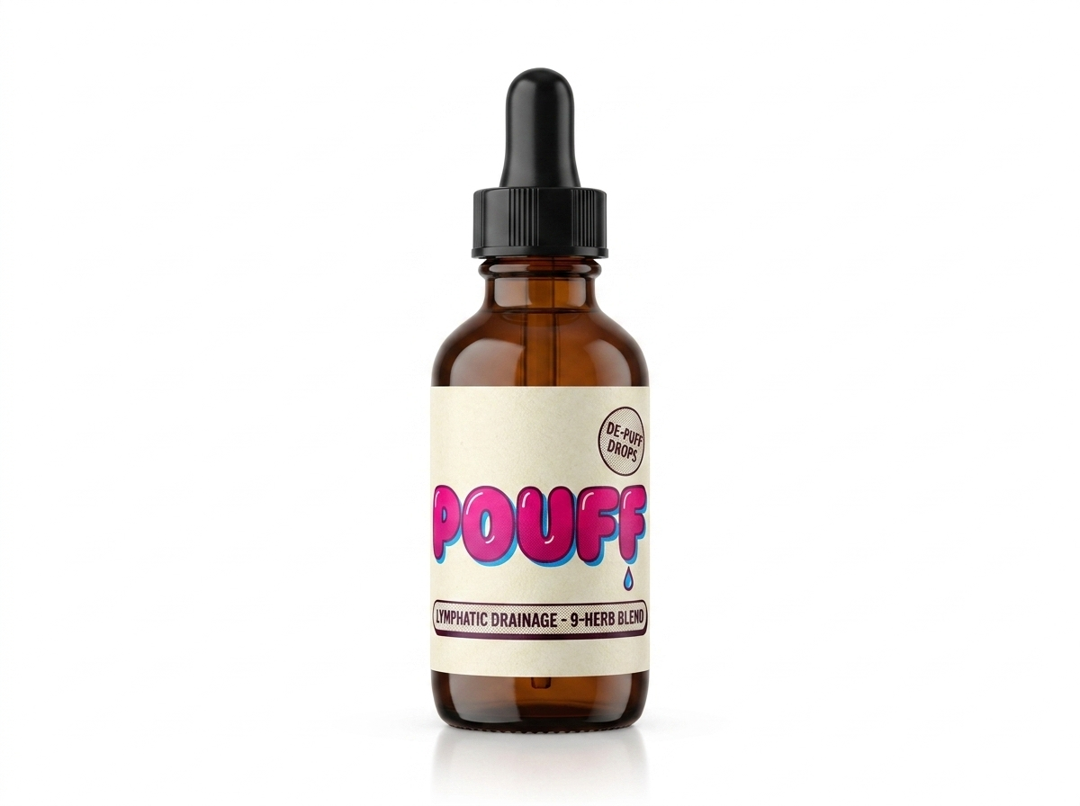
It's not fat. It's fluid. Why your face looks puffiest the second you wake up — and the 2 drops that finally drained mine
I spent a year and a small fortune trying to “fix” my puffy face. Turns out I was treating the wrong thing. A women's-health writer breaks down the lymph connection nobody explained to her.


I'm going to be honest with you, because I wish someone had been honest with me three years ago: I used to wake up not recognizing my own face. Not in a dramatic way — just puffy. Full cheeks, a soft jaw that had no edge to it, little bags under my eyes that made me look like I'd been crying or hadn't slept. I'm in my late thirties, I'm not overweight, and I'd stand at the bathroom mirror at 7am thinking, “whose face is this?”
The maddening part was that it moved. By mid-afternoon my face would look more like itself — a little more defined, a little less swollen. Then a salty dinner, a glass of wine, or one bad night's sleep and I'd wake up puffy all over again. I genuinely believed I'd gained weight in my face. I hadn't. I'd just never been told what was actually going on.
I tried everything — and everything worked for about 20 minutes
If you've struggled with this, you probably have the same graveyard of products I do. A jade gua sha and a rose-quartz roller. An ice roller I kept in the freezer. A stainless-steel cup for cold plunging my face. I did the morning lymphatic face massage I saw a million times on TikTok. I cut salt. I drank a gallon of water a day. I propped my head up on two pillows.

And some of it did something — for a moment. Ten minutes of gua sha would temporarily push the fluid out and I'd look sharper for my morning coffee. By lunch, it was back. I was spending money and the first twenty minutes of every single day chasing a result that never lasted past noon. It felt like bailing water out of a boat that keeps leaking.
Then a friend who's a nurse said five words that changed everything
“That's not fat. It's your lymph.” She explained it in a way no one ever had. Your body has its own drainage network — the lymphatic system — whose entire job is to carry excess fluid and waste out of your tissues. But here's the part almost no one knows: unlike your heart, which pumps blood on its own, the lymphatic system has no pump. It depends entirely on movement and the gentle squeezing of your lymph vessels to push fluid along.
When that drainage gets sluggish — from stress and cortisol, poor sleep, hormones, salt, alcohol, sitting all day, or just getting a little older — the fluid it's supposed to move doesn't get carried away. And where does it settle? In the soft, loose tissue of your face: your cheeks, your jawline, and the delicate skin under your eyes. That is why you look puffiest the moment you wake up. You've been lying flat for eight hours with a drainage system that's barely ticking over. The second you get up and start moving, gravity and motion help it along — which is exactly why your face “wakes up” by the afternoon.
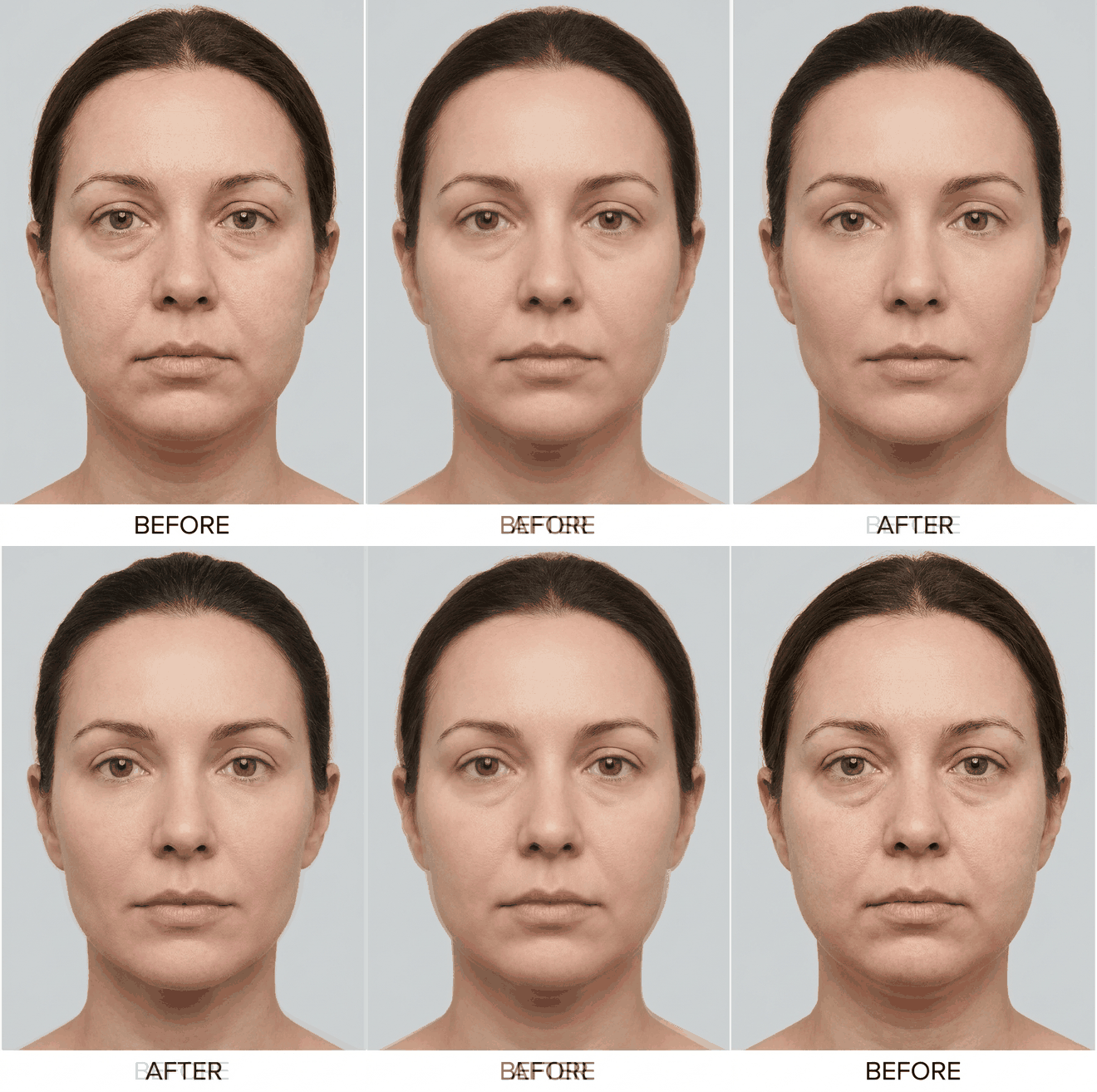
It finally made sense. For years I'd been treating the symptom — pushing fluid around the surface with a cold stone — without ever helping the system that was supposed to drain it in the first place.
The 3 mistakes I was making (you might be too)
Mistake #1: I thought it was fat or weight. It almost never is. Facial puffiness that comes and goes overnight is fluid, not fat — fat doesn't appear by morning and disappear by 3pm.
Mistake #2: I only ever worked on the outside. Gua sha and ice rollers move surface fluid for a little while. They do nothing for why the fluid keeps pooling. It's like mopping the floor without turning off the tap.
3 mistakes people make
Mistake #3: I drowned myself in water and obsessed over salt. Hydration matters, but if your drainage is slow, more water can actually leave you holding more. The fix wasn't drinking harder — it was getting the lymph moving.
What actually moved the needle for me
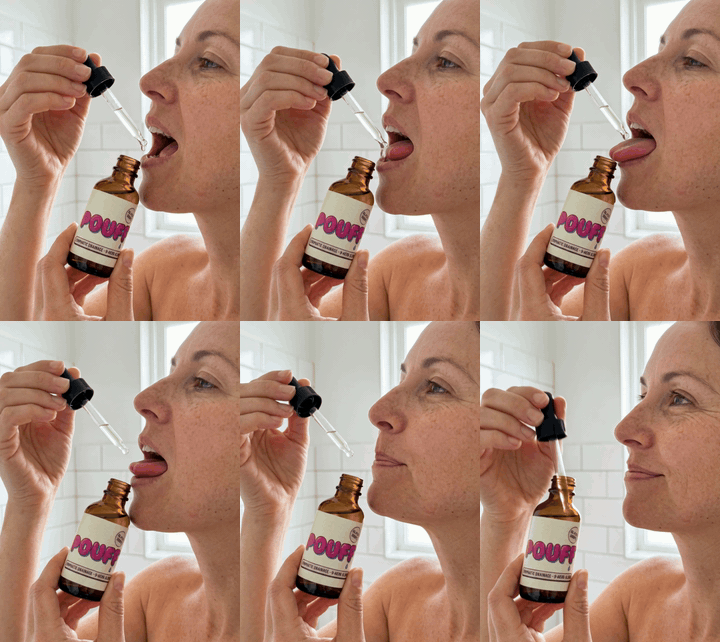
My friend suggested I support the drainage from the inside instead of only massaging the outside. She pointed me to a herbal lymphatic blend — the kind herbalists have used for generations — with cleavers, burdock, dandelion and red root, the botanicals traditionally used to encourage healthy lymphatic flow and fluid balance. A few drops a day, straight under the tongue or in water. That's it. No tools, no 20-minute ritual.
I'll be transparent: the first few days I felt nothing and assumed it was another dud. But somewhere around the end of the first week, I caught myself in a photo a friend took at brunch and actually did a double-take. My jaw had an edge again. The under-eye bags I'd accepted as “just my face” had softened. And it was still there at 4pm — not just for the twenty minutes after a face massage.

By week three it wasn't a fluke anymore. I'd wake up and my face already looked like the “afternoon” version I used to wait around for. I stopped editing my selfies. I stopped angling my chin in every photo. For the first time in years I felt like I looked like me.
Why women 30+ are the ones noticing
It's not a coincidence that this clicks hardest for women in their thirties and forties. This is exactly when shifting hormones, rising cortisol from busy lives, and a naturally slowing lymphatic system stack up — and the face is where it shows first. The good news is the fix is the same: stop chasing the puffiness on the surface and help your body actually drain it.
The simple routine I'd give my younger self
These days my “routine” is almost embarrassingly simple. A few drops in the morning. A little more movement — a short walk, some neck rolls, not chaining myself to a desk for nine hours straight. That's the whole thing. No freezer stones, no gallon of water, no 20-minute massage I'd skip half the time anyway.
If you recognize yourself in any of this — the morning puffiness, the soft jaw, the under-eye bags, the face that doesn't match your body — please know it's very likely fluid, not fat, and there's something you can actually do about the cause instead of hiding the symptom. That one shift is the thing I wish someone had handed me years and a drawer full of gadgets ago.

90-day money-back guarantee — love your results or your money back
POUFF De-Puff Lymphatic Drainage Drops
Drain the puff from within. Wake up to a less puffy, more defined face — a few drops a day, no 20-minute morning ritual.
DRAIN THE PUFF →Frequently asked questions
If you recognize yourself in any of this — the morning puffiness, the soft jaw, the under-eye bags, the face that doesn't match your body — please know it's very likely fluid, not fat, and there's something you can actually do about the cause instead of hiding the symptom. That one shift is the thing I wish someone had handed me years and a drawer full of gadgets ago.
What readers are saying
This article reflects one writer's personal experience. POUFF drops are a herbal dietary supplement and are not intended to diagnose, treat, cure, or prevent any disease. Individual results vary. Consult your physician if pregnant, nursing, or taking medication.