My doctor said my B12 was "normal" — so why were my feet burning every single night?
For two years I blamed my age for the tingling that crept up from my toes. Then a retired pharmacist explained the one thing my blood test never told me — and what I'd been getting wrong about B vitamins this whole time.


I want to tell you about the two years I quietly lost to my own feet — because if any part of this sounds familiar, I think it might save you a lot of the same frustration.
It started small. A faint pins-and-needles feeling in my toes, the kind everyone gets when a foot 'falls asleep.' I'd shake it off and forget about it. But it didn't go away. Over a few months it stopped being an occasional thing and became a permanent guest. By the following winter it had crept up past my toes and into the balls of both feet, and a new sensation had joined it: burning. Not a sharp pain exactly — more like a low electric heat that switched itself on the second I got into bed.
Nights were the worst. I'd lie there at 1 a.m. with my feet outside the covers because the warmth of the blanket made it worse, listening to my husband sleep, doing the maths on how few hours I had left before morning. During the day my feet felt strangely far away, like I was walking on a layer of bubble wrap. I'd grip the handrail going downstairs because I couldn't quite trust where the floor was.
The appointment that left me feeling crazy
So I did the sensible thing. I went to my doctor. He listened, pressed on my feet, ordered bloodwork, and a week later told me the words I now know thousands of people hear: "Everything looks normal. Your B12 is in range. There's nothing to worry about."
I remember sitting in the car afterwards feeling almost embarrassed — as if I'd made the whole thing up. But my feet were still burning that night, and the night after that, and every night for months. 'Normal' on a piece of paper and 'normal' lying in my own bed were two completely different things.
That's when I made the first of the mistakes I want to warn you about.
The mistakes I made (so you don't have to)
Mistake number one: I assumed that because a test came back 'in range,' the problem couldn't have anything to do with vitamins. I now understand a so-called normal reading is a wide window, and it tells you what's floating in your blood — not how much is actually reaching the nerves in your feet, which are the very last stop on the line.
Mistake number two: I started throwing money at the problem. A cheap high-dose B12 from the supermarket. A B-complex from the internet. Then a second, 'stronger' one when the first did nothing. I genuinely lost track of how much I spent on tubs of pills that I'd take for three weeks, feel no different, and shove to the back of a drawer. I'd basically decided supplements were a waste of money and that this was simply my life now.
Mistake number three — the big one — was giving up on understanding why nothing worked. The answer turned out to be embarrassingly simple, and it came from the last person I expected.
The conversation that changed everything
3 mistakes people make
My neighbour's son, Daniel, is a recently retired pharmacist. We were chatting over the fence one afternoon and I mentioned, half-joking, that my feet had a mind of their own. He didn't laugh. He asked two questions: did it start in the toes and move upward, and was it worse at night? When I said yes to both, he nodded like he'd heard it a hundred times.
Then he explained the part no one had ever told me. Our nerves are wrapped in a protective coating — he called it the myelin sheath — and that coating, along with the nerve signalling itself, leans heavily on a small group of B vitamins to stay in good working order: B1, B6 and B12. As we get older, and especially if blood sugar runs on the high side, the body can struggle to keep the nerves in the hands and feet properly supplied. The longest nerves, the ones running all the way down to your toes, tend to feel it first. Hence: tingling that starts in the toes and creeps up.
"But my B12 was normal," I said. He smiled and said the thing I haven't stopped repeating since: "There's a difference between how much you swallow and how much your body can actually use. The cheap synthetic forms are poorly absorbed. You can take a thousand micrograms and your nerves might see a fraction of it."
Form, not just dose
That was the lightbulb. It was never really about taking more — it was about the form. Daniel explained that the active, body-ready versions are a different animal: methylcobalamin (the active form of B12) to help support the integrity of that myelin coating; benfotiamine, a fat-soluble form of B1 designed to absorb far better than ordinary thiamine; and P-5-P, the active form of B6 that supports normal nerve communication. Together they're meant to actually reach the nerves and support healthy, normal sensation — instead of mostly passing straight through you.
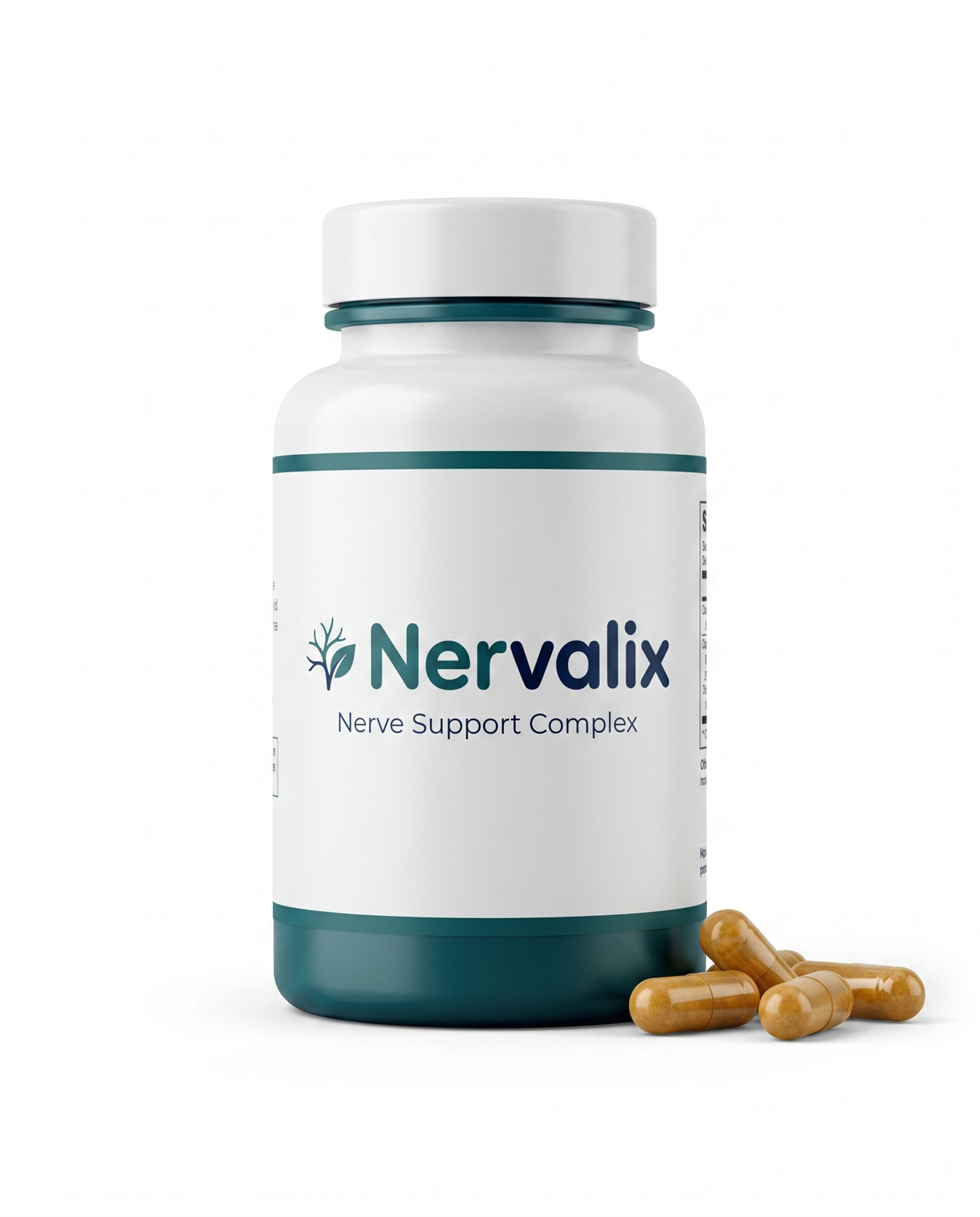
He mentioned that a formula had started going around built on exactly those three active forms — a nerve complex called Nervalix. I'll be honest: after everything I'd wasted, I almost didn't bother. But it came with a 90-day money-back guarantee, which felt like the company was at least willing to put its money where its mouth was. I ordered the three-bottle option and told myself I'd give it an honest run this time.
The turning point
The first couple of weeks, nothing dramatic — and I'm glad it wasn't, because I'd have been suspicious. Then one ordinary Tuesday I realised I'd read in bed for twenty minutes without once noticing my feet. I actually stopped and checked, the way you'd touch a tooth that used to ache. Quiet. Just… quiet.
It built slowly from there. The night-time burning faded from a roar to a hum to something I now rarely think about. The floor came back under me — I stopped white-knuckling the handrail. I won't pretend it's a magic switch and I'd never claim it 'cures' anything; what I can tell you honestly is that my feet feel like mine again, and I sleep through the night.
If you're where I was — feet burning at night, toes that tingle, a blood test that supposedly says you're fine while your own body says otherwise — please don't spend two years feeling crazy like I did. It may not be that you need more. It may simply be that your nerves never had the right form to use in the first place.
I keep a bottle on the windowsill now, next to the kettle, so I never forget the morning one. Small price for getting my evenings — and my sleep — back.

90-day money-back guarantee. Give your nerves a proper run — if you're not happy for any reason within 90 days, send it back for a full refund, no questions asked.
Nervalix™ Nerve Support Complex
Active B vitamins your nerves can actually use — for calmer, more comfortable feet and hands.
GET NERVALIX NOW →Frequently asked questions
I keep a bottle on the windowsill now, next to the kettle, so I never forget the morning one. Small price for getting my evenings — and my sleep — back.
What readers are saying
These statements have not been evaluated by any medical authority. Nervalix is a food supplement and is not intended to diagnose, treat, cure or prevent any disease. Food supplements are not a substitute for a varied, balanced diet and a healthy lifestyle. Individual results vary. If you have a medical condition, are pregnant or breastfeeding, or take medication, consult your doctor before use.